Originally published: | Updated: February 2026
Blog — I’m Just Sayin’ Nutrition | Posted by Lynn
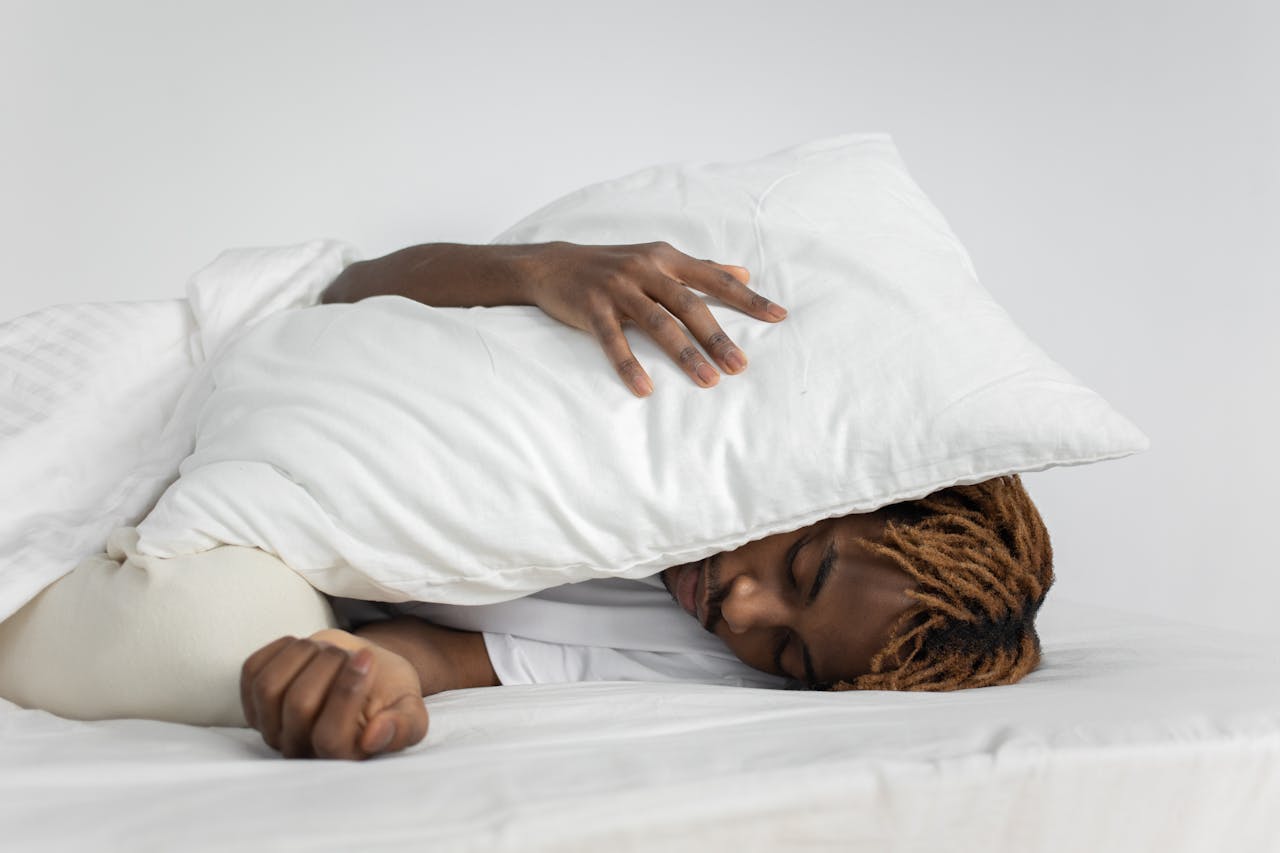
Sleep deprivation effects go far beyond a bad night—they can reshape your health in ways most people don’t realize.
“Go to sleep!” I hated hearing that as a child. And some of us, as adults, still need to be told.
The irony is that the very thing we resisted as kids — being made to rest — turns out to be one of the most powerful things we can do for our health. Not optional. Not a luxury. According to Healthline (updated January 2026), sleep is just as important as eating well and exercising. Tony Schwartz, writing in the Harvard Business Review, went even further: sleep is more important than food. Bold claim. But the science backs it up.
Your Body Has a Schedule — And It Doesn’t Negotiate
Inside each of us, there is what researchers call a Circadian Rhythm — our internal biological clock, running on an approximately 24-hour cycle. The term comes from the Latin circa (“around”) and diēm (“day”). This clock isn’t a metaphor. It is a real, coordinated system involving the brain, the hormonal system, and virtually every cell in the body.
According to the CHEK Institute and a growing body of research, this internal schedule governs two distinct phases of repair during sleep:
- Physical repairs occur roughly between 10 pm and 2 am.
- Psychological and neurological repairs occur between approximately 2 am and 6 am.
During these windows, the brain orchestrates the removal of metabolic waste products, the rebuilding of energy reserves, the restoration of metabolism, and the release of key hormones essential for tissue and cell repair. When we stay up late, fragment our sleep, or consistently get too little of it, we are not just tired — we are interfering with a biological maintenance system our bodies depend on.
How Much Sleep Do We Actually Need?
Most adults require 7 to 9 hours of sleep per night, according to both the CDC and Healthline’s updated review. The reality is that many Americans are functioning on 4 to 5 hours — and calling it fine. It is not fine. The body can adapt in the short term, but sustained sleep deprivation accumulates a debt that the body will eventually try to collect.
Shift work, jet lag, late-night screen time, and marathon movie nights can all disrupt the internal clock. Individual needs do vary somewhat — age, health status, and activity level all play a role — but the idea that some people genuinely “need” only four hours of sleep is not well supported by current research.
The Melatonin Connection
By sundown, the body begins releasing melatonin, a hormone that signals it’s time for sleep. Melatonin doesn’t just make us drowsy — it triggers a cascade of other hormones, including growth hormone, testosterone, and estrogen. These are essential for repairing and regenerating the tissues and cells that were damaged or naturally died throughout the day.
Here is the catch: melatonin production is suppressed by light — and particularly by the blue light emitted by phones, tablets, laptops, and televisions. When we expose ourselves to screens in the hours before bed, we are essentially telling our brains that it’s still daytime. Production slows. The repair cascade is delayed or disrupted. And the longer this continues, the more the body falls behind on maintenance.
What Sleep Deprivation Actually Does to the Body
This is a partial list — and it is not small:
Weight Gain. Sleep deprivation disrupts the hormones that regulate hunger. Ghrelin (the “I’m hungry” hormone) increases. Leptin (the “I’m full” hormone) decreases. The result is that you eat more, crave higher-calorie foods, and gain weight — not because of a lack of willpower, but because of a disrupted hormonal system. A 2020 analysis cited by Healthline found that adults sleeping fewer than 7 hours per night had a 41% increased risk of developing obesity.
Diabetes. Research has found that pre-diabetes and impaired glucose metabolism can be detected in people who sleep only 4 hours a night for as few as 6 days. The body’s ability to regulate blood sugar is directly tied to sleep quality.
Cognitive Impairment. Concentration, productivity, memory, and decision-making all decline measurably with sleep loss. According to Healthline, a 2020 study found that physicians with significant sleep-related impairment were substantially more likely to report clinically significant medical errors. Sleep-deprived drivers are three times more likely to be involved in a car accident.
Weakened Immunity. Lack of sleep makes you more susceptible to infections and slows recovery. During deep sleep, the immune system releases compounds that strengthen the body’s defenses. Less sleep means less of that.
Heart and Stroke Risk. Poor sleep quality and insufficient sleep duration are both linked to increased risk of high blood pressure, heart disease, and stroke. A review of 19 studies found that sleeping fewer than 7 hours per day resulted in a 13% increased risk of death from heart disease.
Alzheimer’s Disease. Research has found links between chronic sleep deprivation and increased production of proteins associated with Alzheimer’s disease. The brain uses deep sleep to clear metabolic waste — including amyloid plaques that are associated with the disease.
Practical Steps That Can Actually Help
Here is what the research and personal experience both support:
Turn off screens at least one hour before bed. The blue light from phones and laptops suppresses melatonin and triggers a “daytime” response in the brain. It may be the single most impactful change you can make if you have trouble falling asleep.
Create darkness. Cover clocks — including the one on the TV. Complete or near-complete darkness supports melatonin production. If you cannot sleep without a light on, that is worth addressing with a healthcare professional.
Cool the room. Research and WebMD both point to approximately 65–69°F (18–20°C) as the optimal temperature range for quality sleep. Body temperature naturally drops during sleep, and a cooler room supports that process.
Set a consistent bedtime goal. Aiming to be in bed by 10:30 or 11:00 pm aligns with the body’s natural repair windows. I used to tell myself I worked better at night because it was quiet. I could get more done. I was wrong. My health reflected that eventually.
Address the light environment in your bedroom. Even small sources of ambient light — LED indicator lights, streetlights through curtains — can affect sleep quality.
The Bottom Line
Sleep is not downtime. It is the most active repair period your body gets. The American Heart Association has formally recognized sleep as one of “Life’s Essential 8” — alongside diet, exercise, blood pressure, cholesterol, blood sugar, weight, and smoking cessation. That is not a minor endorsement.
Most of us were told to go to bed as children because the adults in our lives knew something important: rest is not laziness. It is maintenance. And the body keeps the bill.
I’m just sayin’.
Sources & Further Reading
- WebMD — What Happens When You Sleep? (Updated 2024): webmd.com
- Harvard Business Review — “Sleep is More Important than Food” by Tony Schwartz: hbr.org
- Healthline — 5 Reasons to Get More Sleep (Updated January 2026): healthline.com
- CDC — About Sleep (Adults & Recommendations): cdc.gov
- CHEK Institute — Sleep, Magnesium, and Circadian Rhythms: chekinstitute.com
- NIH/PMC — Circadian Rhythms and Hormonal Homeostasis (Peer-reviewed): ncbi.nlm.nih.gov
- Are Carbs Bad for You? The Carb Killer Mystery Explained
This article is intended for general educational and informational purposes only and does not constitute medical advice. If you are experiencing persistent sleep difficulties or a sleep disorder, please consult a qualified healthcare professional.