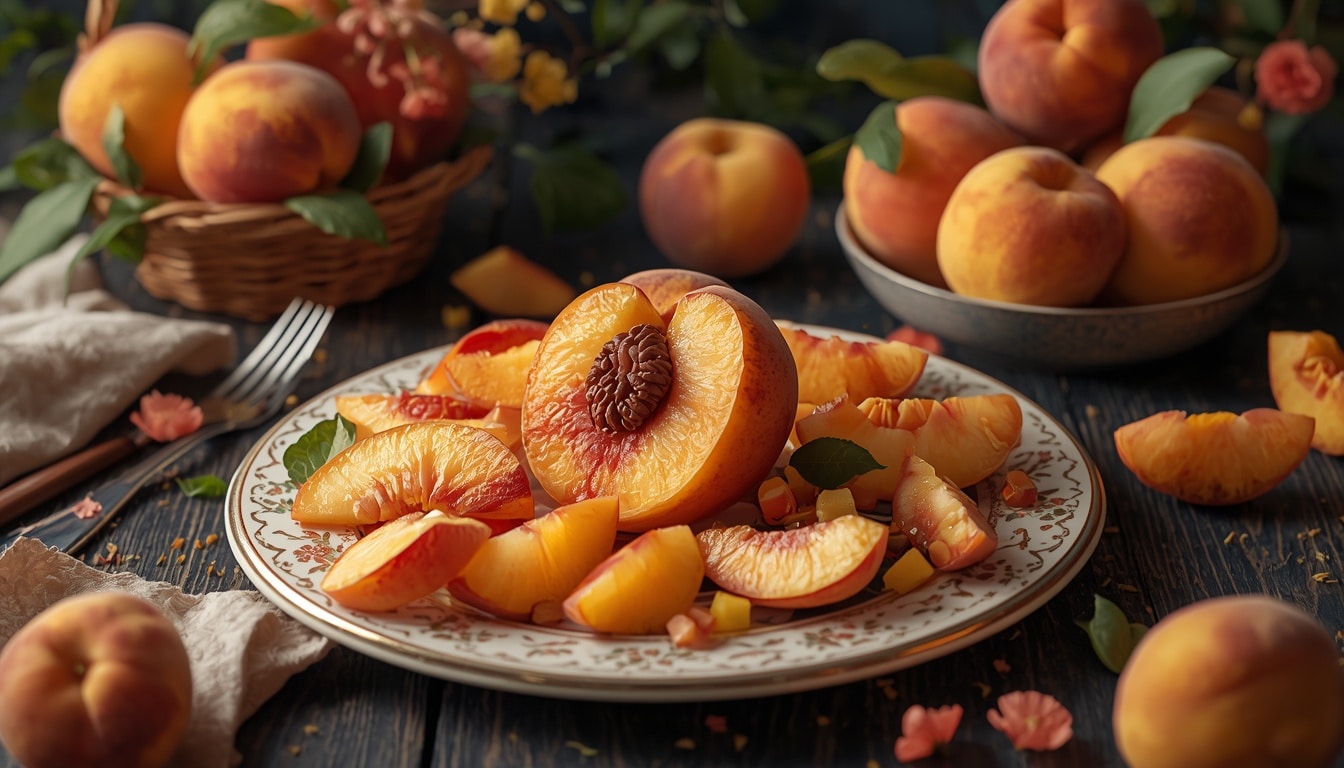
When a Ripe Peach Isn’t Sweet Enough Anymore
This article, about “artificial sweeteners” is intended for general educational and informational purposes only and does not constitute medical advice. If you have concerns about diabetes, blood sugar, or your diet, please consult a qualified healthcare professional before making changes.
Let me tell you about the day a peach let me down.
I bit into a fresh, ripe peach — the kind that should make you close your eyes and smile — and it barely registered. Not sweet enough. And I remember thinking, when did a peach stop being sweet? The peach hadn’t changed. I had. I’d been reaching for the little pink packet for longer than I care to admit, and somewhere along the way my standard for “sweet” had climbed so high that nature couldn’t keep up.
That’s where this starts. Not with a study — with a peach. But the science caught up to my kitchen table, so let’s talk about it.
No sugar, no calories, no guilt — or so we’re told
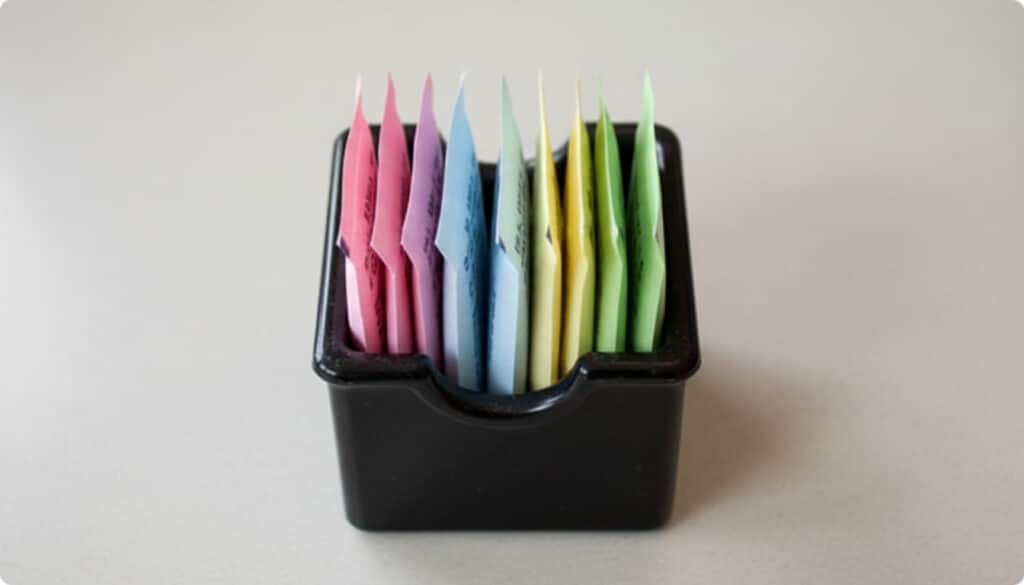
Artificial sweeteners came along promising the impossible: all the sweet, none of the consequences. Zero sugar. Zero calories. Zero guilt. I believed it. I thought I’d found the holy grail.
Here’s a number that stopped me cold. According to the U.S. Food and Drug Administration, these are not “a little sweeter” than sugar — they are engineered sweet. Aspartame (the blue packet) and acesulfame potassium are about 200 times sweeter than table sugar. Saccharin (the pink packet) runs 200 to 700 times sweeter. Sucralose (the yellow packet) is around 600 times. Neotame lands somewhere between 7,000 and 13,000 times. And a newer one, advantame, is roughly 20,000 times sweeter than sugar.
Twenty thousand times. Sit with that. Manufacturers use only a tiny speck, sure — but it leaves me with a question I can’t shake: why does anything need to be 20,000 times sweeter than sugar? And what happens to us when our brains and taste buds get trained on a sweetness that nature never once offered?
What the research actually says (and doesn’t)
I first covered this four years ago, and I went back to see what had changed. Short version: the science is asking better questions now — beyond just calories.
On weight. In 2023, the World Health Organization reviewed the evidence and recommended against using non-sugar sweeteners as a long-term strategy for weight control. Reviewers found no lasting benefit in reducing body fat in adults or children. Now — that doesn’t mean a packet automatically makes you gain weight. It means swapping sugar for a zero-calorie sweetener doesn’t touch the cravings, habits, and patterns that got us here in the first place. I’m living proof. I changed the packet. I never changed my relationship with sweetness. And I never lost a pound — if anything, I ate more.
On your gut. In a 2022 randomized trial published in the journal Cell, researchers gave 120 healthy adults saccharin, sucralose, aspartame, or stevia. All four produced measurable changes in participants’ gut microbiomes. Saccharin and sucralose also worsened the blood-sugar response — in some people. Notice I said some. The effect depended on the person and the community of microbes already living in their gut. So no, I’m not telling you every sweetener wrecks everybody’s gut. I’m telling you these products may not be the biologically “inactive” ingredients we assumed they were.
On your heart. Large population studies have reported associations between frequent sweetener consumption and cardiovascular disease. But hear me clearly: association is not proof of cause. Someone reaching for diet products may already be managing diabetes, weight, or other risks. This is exactly the kind of place we have to be honest about both the concern and the uncertainty. No panic. No hype. Just the truth as it stands today.
The FDA still considers approved sweeteners safe within established limits. But “safe” answers one question — how much can you consume before it’s toxic? It does not answer the questions I actually care about: Will this help me lose weight? Will it restore my taste for real food? Will it move me toward lifelong health? Those are not the same question.
The real trap wasn’t the packet
Here’s what took me years to see. The trap wasn’t the pink packet. The trap was believing I could keep everything intensely sweet and somehow change the outcome. I wanted my cake and to eat it too — but I never stopped wanting the cake.
Some things are made from a plant. And some things are made in a plant. Get it? That little difference changed how I think about everything on my plate.
And this isn’t only an artificial-sweetener problem. It’s high-fructose corn syrup. It’s cane sugar poured into everything. Sometimes it’s just too much — too doggone sweet. We’ve been trained to expect a level of sweetness that real food was never built to match. Nature already gave us peaches, strawberries, blueberries, apples, sweet potatoes, carrots. Maybe the goal isn’t to find something sweeter than sugar. Maybe it’s to fall back in love with the sweetness that’s already here.
I’ll add one more thing, because it matters in the neighborhoods I care about most. “Just eat healthy” advice too often ignores real budgets, real food deserts, and the communities actually navigating them. Retraining your taste buds is one of the few tools that costs nothing and belongs to you. That’s why I keep talking about it.
So what do we do? (Read the label, question the marketing)
- Turn the package over. If a product’s biggest selling point is “no sugar, no calories, no carbs,” ask the next question: then what IS in it?
- Watch the “stevia” that isn’t really stevia. Many powder stevia products are mostly fillers — dextrose, maltodextrin, erythritol — with a little stevia along for the ride. That’s often what’s behind that bitter aftertaste. If you see those fillers on the label, leave it on the shelf. Personally, for hot and cold drinks, I stick with liquid stevia.
- Retrain your palate, slowly. Give real fruit a fair shot again. It may take time for a peach to taste like a peach — that’s the point.
- Ask the honest question before you reach for the packet: Am I reducing sugar, or am I just finding another way to feed my sweet tooth?
- Talk to your doctor before making changes, especially if you’re managing diabetes or heart concerns.
Four years ago, I thought artificial sweeteners were the answer. Today I see them differently. For me, they were never the solution — just another way to keep chasing sweetness.
When a perfectly ripe peach isn’t sweet enough anymore, maybe the problem isn’t the peach.
I’m just sayin’.
Ready to read your plate like a pro?
You don’t have to figure this out alone in the grocery aisle. I put together a free Food Truth Starter Guide — plain English, no filler, no fluff — to help you read labels, spot hidden sweeteners and sugars, and choose real food that fits real budgets.
Get the free Food Truth Starter Guide →
Read the label. Question the marketing. Make it a powerful day.
Sources & Further Reading
- World Health Organization — Use of Non-Sugar Sweeteners: WHO Guideline (2023): who.int · News release
- Suez J. et al. — “Personalized microbiome-driven effects of non-nutritive sweeteners on human glucose tolerance,” Cell (2022): cell.com · PubMed
- U.S. Food & Drug Administration — Aspartame and Other Sweeteners in Food: fda.gov
- Harvard T.H. Chan School of Public Health — Unpacking the WHO Guidelines on Non-Sugar Sweeteners: nutritionsource.hsph.harvard.edu
About Lynn
Lynn Peterson (“Lynn Pete”) is an instructor, writer, researcher, and health and nutrition blogger who describes herself as “just the messenger.” She hosts the Health News & Views: Food the Final Frontier podcast, dedicated to bringing clarity to the health disparities in Black and brown communities. She holds a B.A. in English/Communications and M.S. and D.Sc. degrees in Education, and is a Certified Post-Secondary Instructor and Certified Health Coach.
Food: The Final Frontier.